

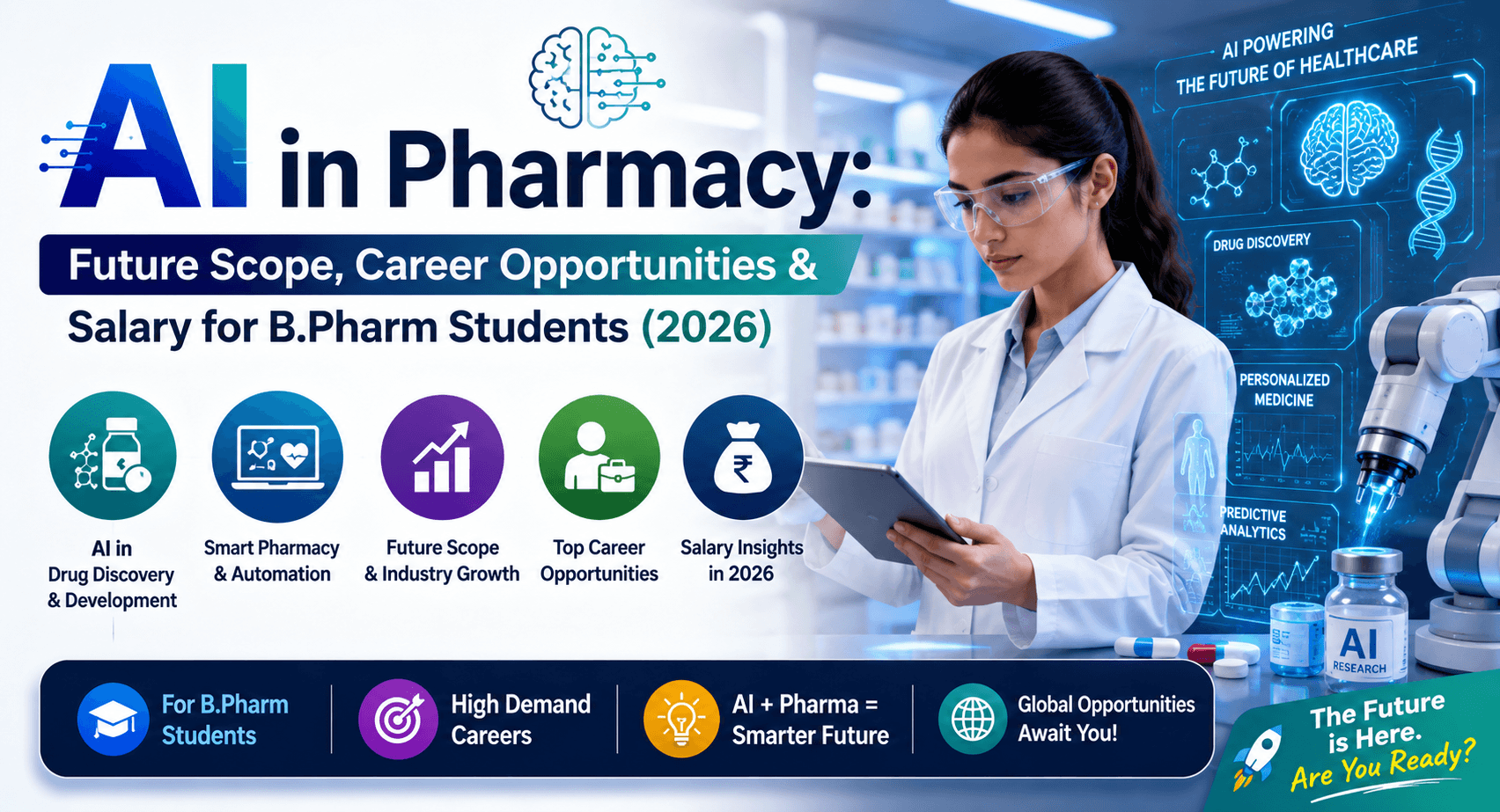
AI in Pharmacy: Future Scope, Career Opportunities & Salary for B.Pharm Students (2026)
Haridwar University
Artificial Intelligence is no longer limited to engineering, software development, or data science. Today, AI is transforming healthcare, medicine, and the pharmaceutical industry at an unprecedented pace. From drug discovery and clinical research to patient care and pharmaceutical manufacturing, AI is becoming an essential part of modern pharmacy practice.
As a result, many students are now asking important questions:
- What is AI in Pharmacy?
- What is the future scope of AI in Pharmacy?
- Can AI create better career opportunities for B.Pharm students?
- Will pharmacy professionals need AI skills in the future?
- How much salary can AI-related pharmacy roles offer?
These questions are highly relevant because the pharmaceutical industry is entering a new era where technology and healthcare are becoming deeply connected.
According to reports from organizations such as McKinsey, Deloitte, and the World Economic Forum, Artificial Intelligence is expected to play a major role in healthcare innovation, drug development, diagnostics, and personalized medicine over the next decade.
For students pursuing pharmacy education, this creates a significant opportunity. Those who understand both pharmaceutical sciences and emerging technologies may find themselves better prepared for future industry requirements.
In this guide, we will explore how AI is transforming pharmacy, the future scope of AI in Pharmacy, career opportunities, salary expectations, essential skills, and how students can prepare themselves for this rapidly evolving field.
Table of Contents
- What is AI in Pharmacy?
- Why AI in Pharmacy Matters for Students
- Traditional Pharmacy vs AI in Pharmacy
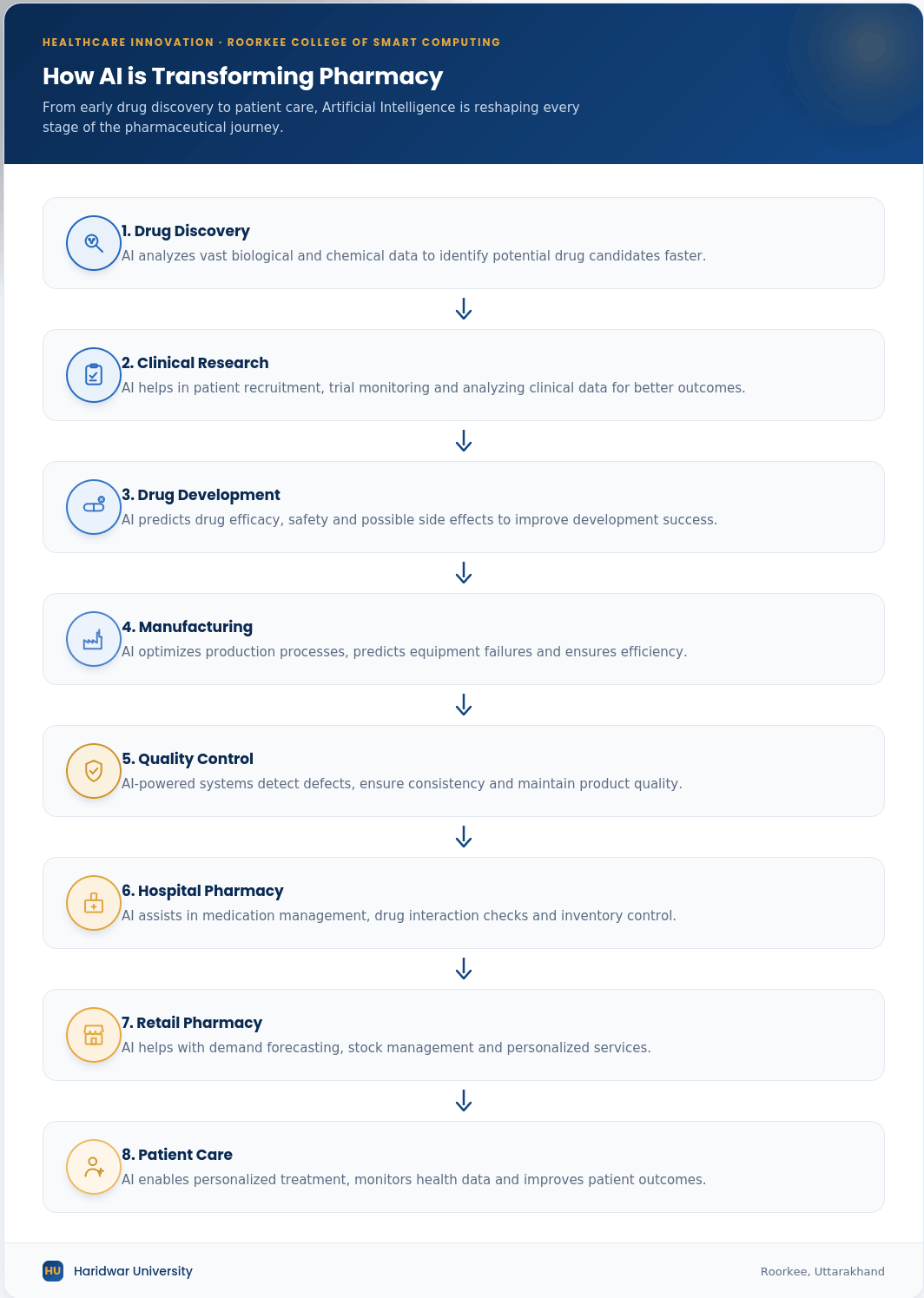
- How AI is Transforming the Pharmaceutical Industry
- How AI is Transforming Pharmacy: Real-World Applications Every Student Should Know
- Future Scope of AI in Pharmacy: Why It Matters in 2026 and Beyond
- Career Opportunities in AI in Pharmacy
- Salary Trends in AI-Related Pharmacy Careers
- Skills Every Pharmacy Student Should Learn in the AI Era
- Frequently Asked Questions (FAQs)
- Conclusion
What is AI in Pharmacy?
AI in Pharmacy refers to the use of Artificial Intelligence technologies to improve various pharmaceutical processes, healthcare services, and medication-related activities. Artificial Intelligence systems can analyze large amounts of medical and pharmaceutical data much faster than traditional methods. This helps researchers, healthcare professionals, and pharmaceutical companies make informed decisions more efficiently.
In the pharmacy sector, AI can assist with drug discovery, clinical trials, medical research, disease prediction, pharmacovigilance, quality control, supply chain management, patient monitoring, and personalized medicine.
Rather than replacing pharmacists, AI acts as a powerful support system that helps professionals work more efficiently and accurately. For example, a task that previously required months of data analysis can now be completed in days using advanced AI systems. This is one of the primary reasons why AI in Pharmacy is becoming an important topic for students and professionals alike.
AI in Pharmacy Explained Through a Simple Example: Imagine a pharmaceutical company trying to identify a potential medicine for a newly discovered disease. Traditionally, researchers would need to examine thousands of chemical compounds through extensive laboratory testing. With Artificial Intelligence, advanced algorithms can analyze millions of data points, predict promising compounds, and significantly reduce research time. This does not eliminate the role of pharmacists or scientists. Instead, it allows them to focus on validation, innovation, and decision-making while AI handles large-scale data analysis.
Why AI in Pharmacy Matters for Students
Many students assume that Artificial Intelligence is relevant only for engineering or computer science graduates. However, the reality is very different. Healthcare and pharmaceutical organizations are increasingly adopting digital technologies, data analytics, machine learning, and automation systems.
This means future pharmacy professionals may be expected to work alongside AI-powered tools throughout their careers. Students who develop an understanding of AI concepts can gain several advantages:
- Better Career Opportunities: Pharmaceutical companies increasingly value professionals who can work with modern technologies and data-driven systems.
- Improved Research Skills: AI helps researchers identify patterns and insights that would be difficult to detect manually.
- Faster Innovation: Modern drug discovery relies heavily on computational analysis and predictive modeling.
- Industry Relevance: The pharmaceutical industry is actively investing in AI-powered solutions across multiple departments.
- Competitive Advantage: Students who combine pharmacy knowledge with technology skills may stand out in recruitment processes.
Traditional Pharmacy vs AI in Pharmacy
One of the easiest ways to understand AI in Pharmacy is by comparing traditional methods with modern AI-powered approaches.
| Aspect | Traditional Pharmacy | AI in Pharmacy |
|---|---|---|
| Drug Discovery | Mostly manual research | AI-assisted compound screening |
| Clinical Trials | Time-consuming analysis | Automated data insights |
| Patient Monitoring | Limited tracking | Real-time monitoring |
| Quality Control | Human inspection | Predictive quality systems |
| Supply Chain | Reactive management | Predictive forecasting |
| Personalized Medicine | General treatment plans | Individualized recommendations |
| Data Analysis | Manual interpretation | Large-scale AI analysis |
How AI is Transforming the Pharmaceutical Industry
The pharmaceutical industry is currently undergoing one of the biggest technological transformations in its history. Artificial Intelligence is being integrated into nearly every stage of the pharmaceutical lifecycle. From discovering new medicines to ensuring drug safety, AI technologies are helping organizations work faster and more effectively.
Major pharmaceutical companies around the world are already investing heavily in AI-driven research and development initiatives. According to industry reports, AI adoption is expected to continue growing across drug discovery, manufacturing, regulatory compliance, and patient care over the coming years.
Students interested in technology-driven healthcare careers may also explore B.Pharm (with AI). Those interested in understanding how Artificial Intelligence is transforming other professional fields can read AI vs CSE: Which Engineering Branch Should You Choose After 12th?. For students exploring pharmacy education pathways, the School of Pharmacy can provide additional information about available programs and facilities.
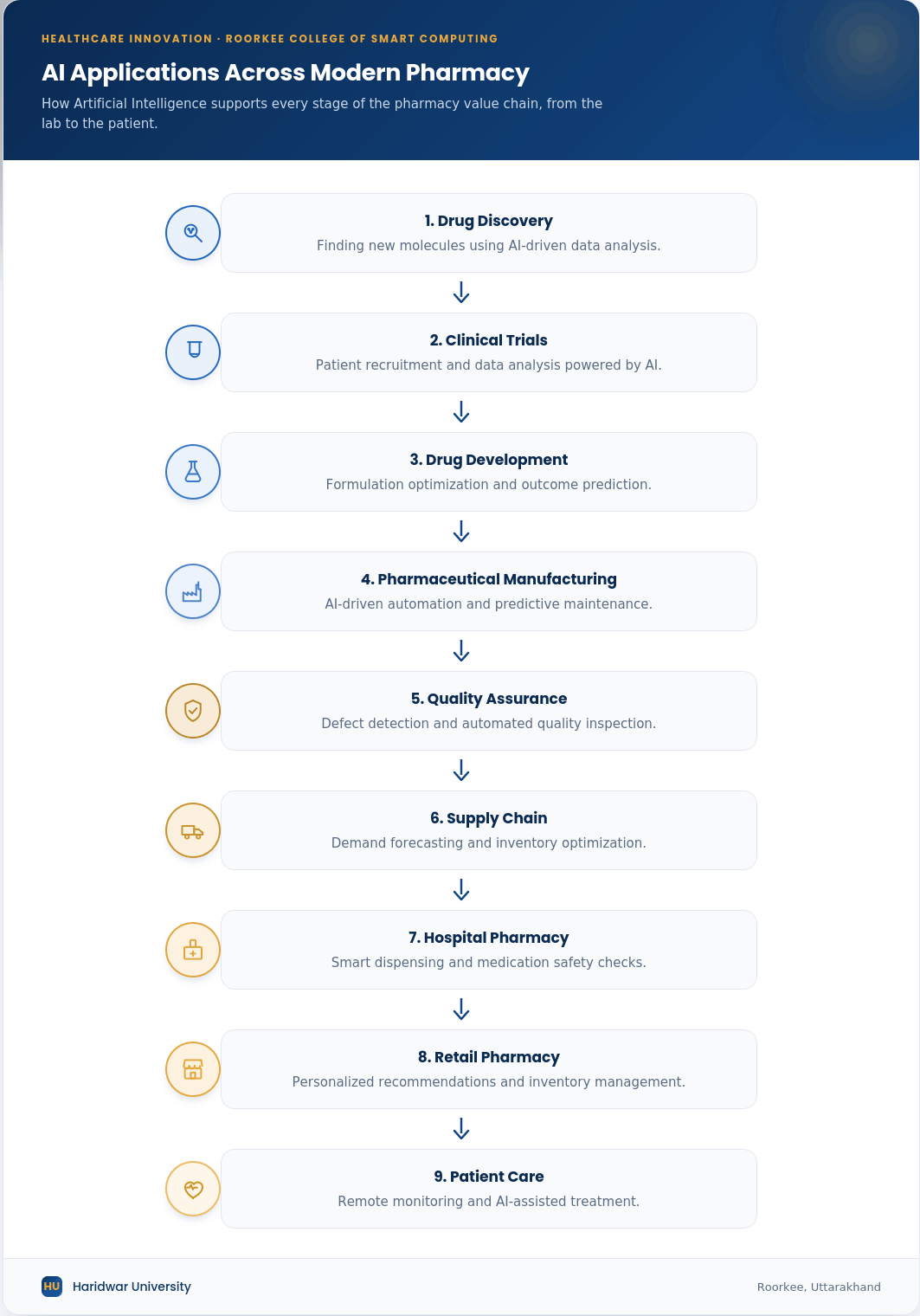
How AI is Transforming Pharmacy: Real-World Applications Every Student Should Know
Artificial Intelligence is already making a measurable impact across the pharmaceutical industry. What once seemed like futuristic technology is now helping researchers discover medicines faster, improving patient care, supporting pharmacists, and making pharmaceutical manufacturing more efficient.
Let's explore some of the most significant applications of AI in Pharmacy.
AI in Drug Discovery
Developing a new medicine is a complex and expensive process. Traditionally, researchers spend years identifying potential drug candidates and testing thousands of chemical compounds before finding one that shows promise. AI systems can analyze millions of biological and chemical data points within a short time. Machine learning models help researchers predict which compounds are most likely to become effective medicines, allowing scientists to focus their laboratory work on the most promising options.
Recommended Outbound Sources:
AI in Clinical Trials
Clinical trials are one of the most important stages in medicine development. They help determine whether a new drug is safe and effective before it reaches patients. AI helps researchers by identifying suitable participants more efficiently, detecting patterns in patient data, monitoring trial progress, predicting possible safety concerns, and improving data accuracy.
AI in Personalized Medicine
Every patient responds differently to medicines due to factors such as genetics, lifestyle, age, and medical history. Artificial Intelligence helps healthcare professionals analyze patient-specific information to recommend more personalized treatment approaches, including identifying the most suitable medication, predicting potential side effects, optimizing dosage recommendations, and supporting treatment planning.
AI in Pharmaceutical Manufacturing
Manufacturing medicines requires strict quality standards, accurate formulations, and regulatory compliance. AI is helping pharmaceutical companies improve production by monitoring manufacturing equipment, detecting production defects early, predicting equipment maintenance needs, improving production efficiency, and reducing material wastage.
AI in Quality Control and Drug Safety
Quality control is one of the most critical responsibilities within pharmaceutical manufacturing. AI systems can analyze production data continuously to identify unusual patterns that may indicate defects or quality issues. Similarly, AI supports pharmacovigilance by helping organizations identify and analyze reports of adverse drug reactions from large healthcare databases.
AI in Hospital Pharmacy
Within hospital pharmacy, AI can assist pharmacists by checking prescriptions for possible interactions, supporting medication management, reducing medication errors, managing inventory more efficiently, and providing clinical decision support.
AI in Retail Pharmacy
Retail pharmacies are also experiencing digital transformation. AI-powered systems can help with inventory forecasting, demand prediction, automated stock management, customer service chatbots, and prescription refill reminders.
AI in Pharmaceutical Supply Chain
The pharmaceutical supply chain involves manufacturers, distributors, hospitals, pharmacies, and healthcare providers. AI helps organizations forecast medicine demand, optimize inventory levels, predict supply disruptions, and improve logistics planning to ensure medicines reach patients on time.
AI in Medical Research and Data Analysis
Modern pharmaceutical research generates enormous amounts of data. AI can process large datasets—including clinical trial results, genomic information, and patient outcomes—much faster than traditional analytical methods, helping researchers identify meaningful insights and accelerate scientific discoveries.
Traditional Pharmacy vs AI-Enabled Pharmacy (Area Comparison)
| Area | Traditional Approach | AI-Enabled Approach |
|---|---|---|
| Drug Discovery | Manual screening of compounds | AI-assisted prediction of promising compounds |
| Clinical Trials | Manual participant selection and data analysis | AI-assisted patient matching and data insights |
| Manufacturing | Periodic quality checks | Continuous predictive monitoring |
| Hospital Pharmacy | Manual medication review | AI-supported prescription validation |
| Retail Pharmacy | Manual inventory management | AI-based demand forecasting |
| Pharmacovigilance | Human review of adverse events | AI-assisted pattern detection |
| Patient Care | General treatment support | Personalized, data-driven recommendations |
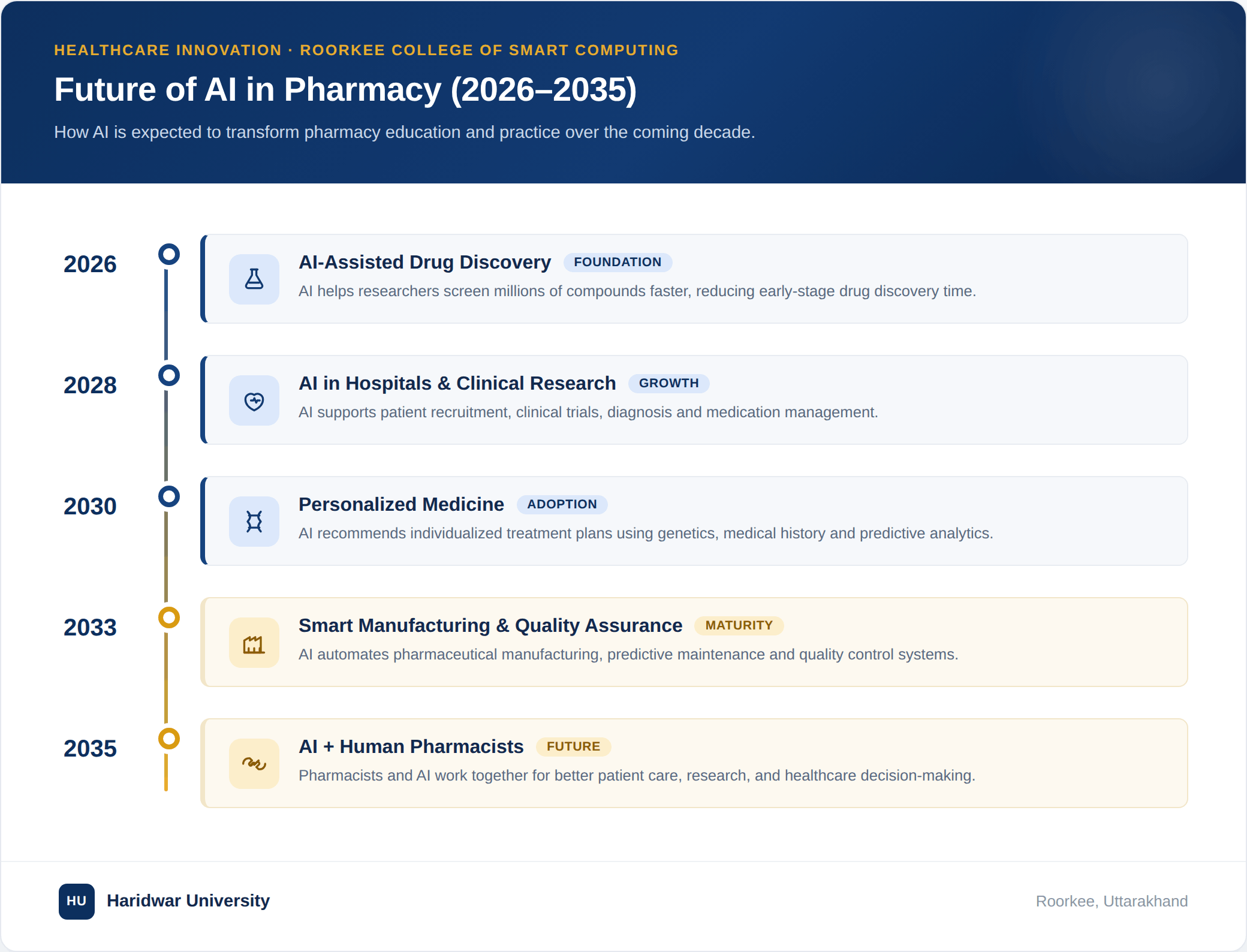
Future Scope of AI in Pharmacy: Why It Matters in 2026 and Beyond
The pharmacy profession has continuously evolved with scientific discoveries, regulatory changes, and technological advancements. Artificial Intelligence represents the next major shift that is expected to influence how medicines are researched, manufactured, prescribed, and monitored.
Rather than replacing pharmacists, AI is changing the way pharmacy professionals work. Routine and data-intensive tasks are increasingly being supported by intelligent systems, allowing healthcare professionals to spend more time on clinical judgement, research, patient counselling, and decision-making.
According to reports from organizations such as McKinsey & Company, the World Economic Forum, and Deloitte, AI adoption across healthcare and life sciences is expected to continue growing over the coming decade. Pharmaceutical companies are investing in AI to accelerate innovation, improve operational efficiency, and enhance patient outcomes.
For today's pharmacy students, this means that understanding AI is becoming an additional professional advantage rather than an optional extra.
Why the Future Looks Promising for Pharmacy Students:
- Growing Investment in Pharmaceutical Innovation: Pharmaceutical companies are investing heavily in digital transformation, advanced analytics, and AI-assisted research to shorten drug development timelines, improve clinical trial efficiency, and optimize manufacturing processes.
- Expansion of Digital Healthcare: Hospitals, healthcare providers, and pharmacies are adopting electronic health records, telemedicine, clinical decision support systems, and AI-enabled healthcare platforms.
- Demand for Data-Driven Decision Making: Healthcare generates enormous amounts of clinical and pharmaceutical data every day. AI helps professionals analyze this information more efficiently, supporting evidence-based decisions.
- Continuous Learning Will Become Essential: The pharmacy profession has always required continuous education. The emergence of AI simply adds another dimension. Future professionals may need to understand how intelligent technologies complement pharmaceutical sciences without replacing the core knowledge that pharmacists provide.
Career Opportunities in AI in Pharmacy
One of the biggest questions students ask is: "What career opportunities will AI create for pharmacy graduates?" The answer is encouraging. Artificial Intelligence is not creating an entirely new profession called "AI Pharmacist." Instead, it is transforming many existing pharmacy and pharmaceutical roles by introducing digital technologies and data-driven tools.
Graduates with pharmacy knowledge, combined with an understanding of AI applications, may find opportunities across research, healthcare, manufacturing, clinical services, and pharmaceutical technology.
| Career Role | How AI is Used |
|---|---|
| Drug Discovery Research Associate | AI-assisted identification of promising drug compounds |
| Clinical Research Associate | AI-supported patient selection and clinical data analysis |
| Pharmacovigilance Associate | AI-based monitoring of drug safety reports |
| Regulatory Affairs Professional | AI-assisted documentation and compliance support |
| Medical Data Analyst | Analysis of healthcare and pharmaceutical datasets |
| Pharmaceutical Manufacturing Executive | AI-supported production monitoring and quality control |
| Hospital Pharmacist | Clinical decision support and medication management systems |
| Retail Pharmacist | Inventory optimization and digital patient engagement |
| Digital Health Specialist | AI-enabled healthcare solutions and patient technologies |
| Medical Affairs Professional | Data interpretation and scientific communication |
Top Industries Hiring Pharmacy Graduates with Digital Skills:
AI is influencing recruitment across multiple sectors. Graduates with a combination of pharmaceutical knowledge and digital awareness may explore opportunities in:
- Pharmaceutical companies
- Biotechnology organizations
- Clinical Research Organizations (CROs)
- Hospitals and healthcare systems
- Healthcare technology and medical device companies
- Regulatory agencies
- Digital healthcare startups and health informatics firms
Salary Trends in AI-Related Pharmacy Careers
Salary is influenced by several factors, including educational qualifications, technical skills, internships, employer, location, and job responsibilities. Rather than focusing solely on job titles, students should understand that professionals who combine pharmacy expertise with emerging digital skills may become eligible for a broader range of opportunities.
The following table presents indicative entry-level salary ranges in India based on industry data from AmbitionBox, Glassdoor, Foundit, and employer insights.
| Career Role | Approximate Salary (LPA) |
|---|---|
| Hospital Pharmacist | ₹2.5–5 LPA |
| Clinical Research Associate | ₹3–6 LPA |
| Pharmacovigilance Associate | ₹3–5.5 LPA |
| Regulatory Affairs Executive | ₹3.5–6 LPA |
| Medical Writer | ₹3–6 LPA |
| Drug Safety Associate | ₹3–5.5 LPA |
| Pharmaceutical Manufacturing Executive | ₹3–6 LPA |
| Medical Data Analyst | ₹5–9 LPA |
| AI-Enabled Drug Discovery Roles* | ₹6–12 LPA* |
*Advanced AI-focused research roles generally require additional specialization, higher qualifications, or relevant experience.
Note: Salary ranges compiled from publicly available information on AmbitionBox, Glassdoor, and Foundit. Actual salaries vary based on employer, location, skills, and experience.
Skills Every Pharmacy Student Should Learn in the AI Era
Learning AI does not mean becoming a software engineer. Instead, pharmacy students should focus on developing a balanced combination of pharmaceutical knowledge, digital literacy, and professional skills.
| Technical Skills | Professional & Soft Skills |
|---|---|
| Pharmacology | Communication |
| Drug Formulation | Critical Thinking |
| Clinical Pharmacy | Problem Solving |
| Digital Healthcare Systems | Teamwork & Collaboration |
| Data Interpretation & Analysis | Ethical Decision Making |
| AI Awareness & Tech Literacy | Adaptability & Flexibility |
| Research Methods & Biostatistics | Continuous Learning |
Do Pharmacy Students Need to Learn Coding?
This is one of the most common concerns among students. The answer is not necessarily. Most pharmacy graduates are not expected to build AI algorithms or develop software applications. Instead, they should understand: how AI supports pharmaceutical research, how AI is applied in healthcare, how to interpret AI-generated insights responsibly, the ethical and regulatory considerations surrounding AI in medicine, and how to work effectively with AI-enabled tools.
Having a basic understanding of digital technologies can be beneficial, but deep programming expertise is not a prerequisite for most pharmacy careers. Students interested in technology-integrated pharmacy education can explore B.Pharm (with AI) and D.Pharm (with AI) to learn how AI concepts are being incorporated alongside traditional pharmaceutical sciences.
Should Pharmacy Students Learn AI?
One of the most frequently asked questions today is whether pharmacy students should actively learn Artificial Intelligence. The simple answer is yes, but with the right expectations. Learning AI does not mean every pharmacy student should become a software developer or machine learning engineer. Instead, students should understand how AI is transforming pharmaceutical research, healthcare delivery, hospital pharmacy, manufacturing, and patient care. Just as computers became an essential part of pharmacy education over the last two decades, AI is likely to become another valuable tool that pharmacy professionals use in their daily work.
Will AI Replace Pharmacists?
This is one of the biggest concerns among students. The short answer is no. AI is expected to change how pharmacists work, not eliminate the profession. Many pharmacy responsibilities require clinical judgement, ethical decision-making, patient counselling, regulatory understanding, and communication. These are areas where human expertise remains essential.
AI is particularly useful for repetitive and data-intensive tasks such as processing large datasets, identifying patterns in medical records, supporting drug discovery, monitoring medicine safety, predicting inventory requirements, and assisting clinical decision-making. Pharmacists will continue to play a vital role in ensuring medicines are used safely and effectively. AI should be viewed as a tool that enhances professional practice rather than replacing it.
How Haridwar University Prepares Students for the Future of Pharmacy
As the pharmaceutical industry continues to evolve, pharmacy education must also adapt to changing industry expectations. Haridwar University aims to provide students with a strong foundation in pharmaceutical sciences while encouraging exposure to emerging technologies and modern healthcare practices.
Students enrolled in B.Pharm (with AI) study core pharmacy subjects while gaining insights into how technologies such as Artificial Intelligence are influencing research, healthcare, and pharmaceutical innovation. Depending on the curriculum and practical training opportunities, students may also benefit from modern laboratories, an industry-oriented curriculum, experienced faculty guidance, internship and industrial exposure, and placement support.
Students interested in diploma-level pharmacy education can explore D.Pharm (with AI), while those looking to continue higher education can learn more about M.Pharm Programmes. To understand the complete academic ecosystem, readers can visit the School of Pharmacy or explore the Admission Process for eligibility and programme details.
Frequently Asked Questions
1. What is AI in Pharmacy?
AI in Pharmacy refers to the use of Artificial Intelligence to support pharmaceutical research, drug discovery, clinical trials, manufacturing, patient care, and healthcare decision-making through intelligent data analysis and automation.
2. Is AI useful for B.Pharm students?
Yes. Understanding AI can help B.Pharm students become familiar with emerging technologies used in pharmaceutical research, hospitals, clinical studies, and digital healthcare.
3. Will AI replace pharmacists?
No. AI is designed to assist pharmacists by improving efficiency and supporting decision-making. Human expertise remains essential for patient care, ethical decisions, and clinical judgement.
4. What is the future scope of AI in Pharmacy?
The future scope is promising as pharmaceutical companies, hospitals, research organizations, and healthcare providers continue adopting AI technologies for innovation, efficiency, and improved patient outcomes.
5. What career opportunities are available in AI in Pharmacy?
Career options include clinical research, pharmacovigilance, regulatory affairs, medical data analysis, pharmaceutical manufacturing, hospital pharmacy, digital health, and drug discovery.
6. Do pharmacy students need coding to learn AI?
No. Most pharmacy students do not need advanced programming skills. Understanding AI concepts, digital healthcare, and data interpretation is generally more valuable than becoming a software developer.
7. Which industries hire pharmacy graduates with AI knowledge?
Pharmaceutical companies, biotechnology firms, hospitals, contract research organizations (CROs), healthcare technology companies, regulatory agencies, and digital health startups all value professionals who understand modern healthcare technologies.
8. Is AI in Pharmacy a good career choice?
AI is creating new opportunities within the pharmacy profession rather than replacing traditional careers. Students who combine strong pharmaceutical knowledge with digital skills may have access to a wider range of career options.
9. What skills should pharmacy students develop for the future?
Students should focus on pharmacology, clinical knowledge, communication, research methodology, digital literacy, ethical decision-making, problem-solving, and an understanding of AI applications in healthcare.
10. Which pharmacy course is suitable for students interested in AI?
Students interested in combining pharmaceutical sciences with emerging technologies can explore B.Pharm (with AI) and other AI-integrated pharmacy programmes, depending on their academic interests and career goals.
Conclusion
Key Takeaways:
- AI is becoming an important part of the pharmaceutical industry.
- Pharmacy knowledge remains the foundation of every successful career.
- AI supports pharmacists rather than replacing them.
- Drug discovery, manufacturing, research, and healthcare are increasingly using AI-powered technologies.
- Digital literacy and continuous learning are becoming valuable professional skills.
- Students who combine pharmaceutical knowledge with emerging technologies may be better prepared for future career opportunities.
Artificial Intelligence is reshaping many aspects of healthcare and the pharmaceutical industry, from drug discovery and clinical research to manufacturing and patient care. For pharmacy students, this shift represents an opportunity to develop new skills while strengthening their foundation in pharmaceutical sciences.
The future of pharmacy will continue to rely on qualified professionals who can combine scientific knowledge, ethical responsibility, and technological awareness. AI is expected to support pharmacists by improving efficiency and enabling better decision-making, but it cannot replace the human expertise required in patient care and healthcare delivery.
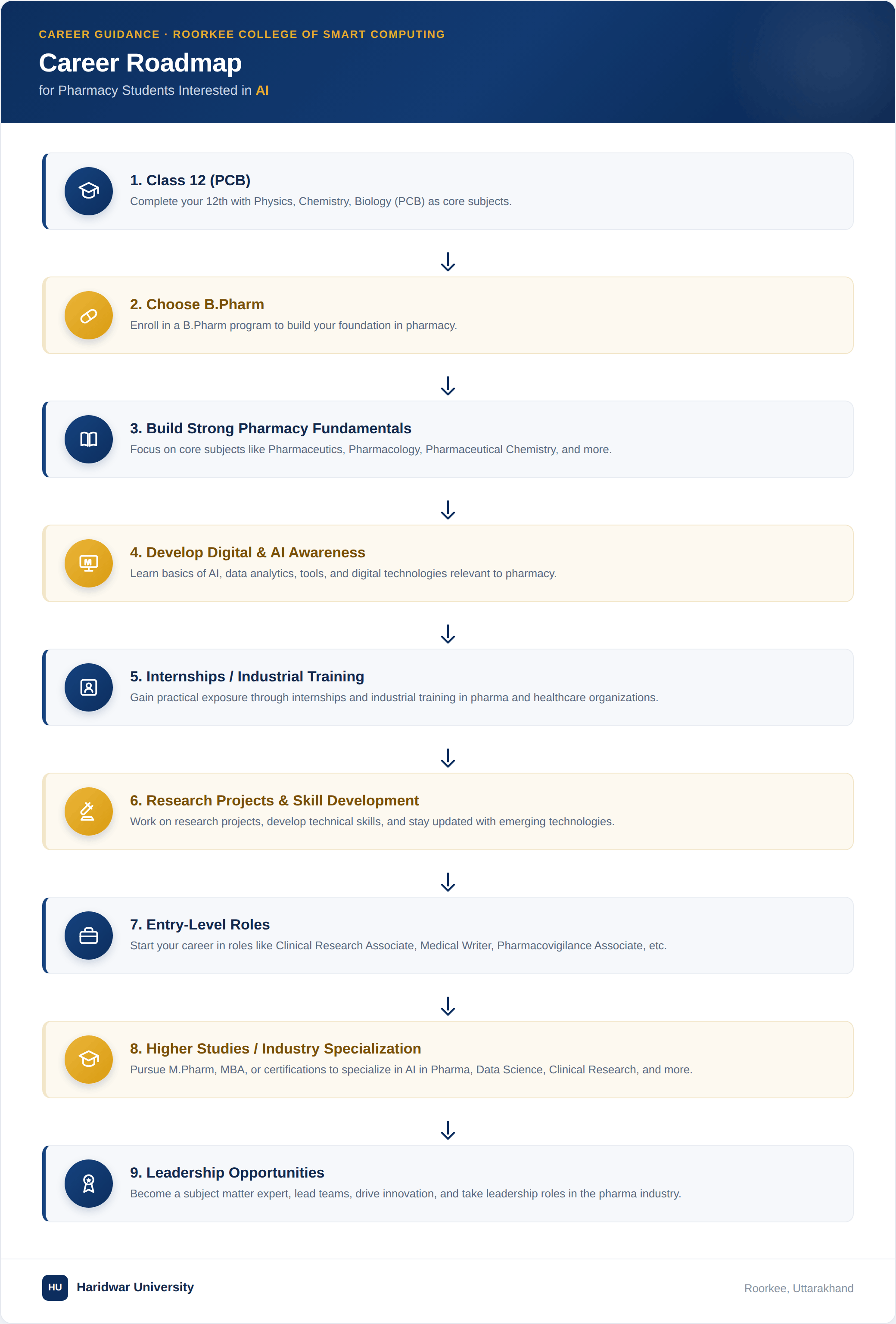
Students who remain curious, embrace continuous learning, and develop an understanding of emerging technologies will be better prepared for the evolving healthcare landscape. Whether you are planning to pursue pharmacy after Class 12 or are already studying B.Pharm (with AI), building awareness of Artificial Intelligence today can help you prepare for the opportunities of tomorrow.