

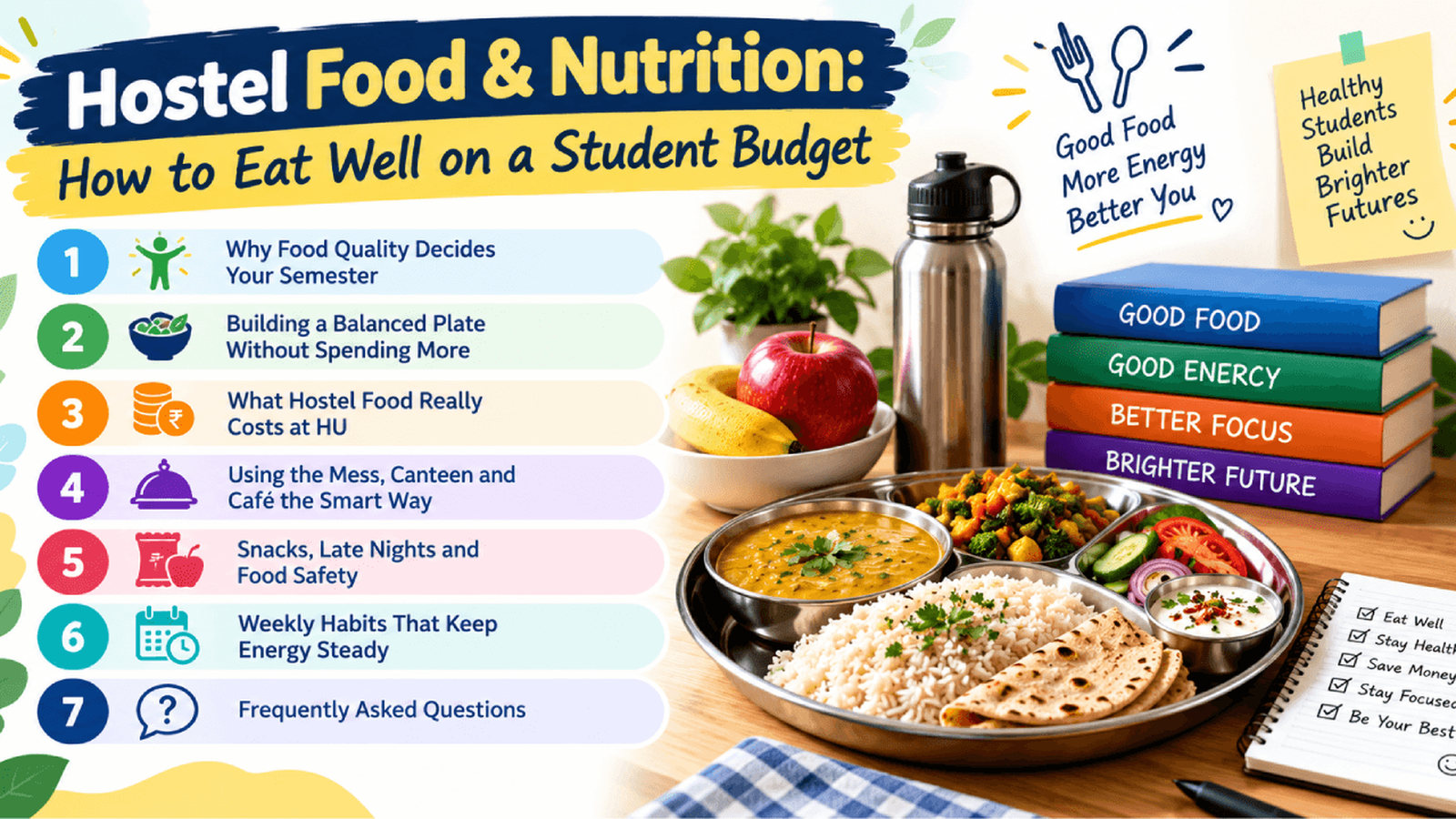
Nobody warns you that the hardest part of hostel life isn’t the 8:00 AM lecture. It’s dinner, three weeks into the semester, when the dal feels routine and your wallet is looking thin. Learning how to eat well on a student budget has very little to do with rigid willpower or expensive supplement powders. It comes down to a few practical habits you establish early, before fatigue and convenience decide for you.
This guide covers what a balanced hostel plate looks like, what food actually costs at Haridwar University, how to navigate the mess and 24/7 cafe sensibly, and how to stop late-night snacks from quietly eating through your pocket money.
Table of Contents
- • 1. Why Food Quietly Decides Your Semester
- • 2. Building a Balanced Plate Without Spending More
- • 3. What Hostel Food Really Costs at HU
- • 4. Using the Mess, Canteen and Cafe the Smart Way
- • 5. Snacks, Late Nights and Food Safety
- • 6. Weekly Habits That Keep Energy Steady
- • 7. Frequently Asked Questions (FAQs)
1. Why Food Quietly Decides Your Semester
What Your Body Is Asking For
Skip breakfast once for an extra twenty minutes of sleep, and nothing catastrophic happens. Do it every morning for three consecutive weeks, and you will inevitably notice the 11:00 AM cognitive fog, erratic afternoon energy crashes, and intense late-evening cravings for sugary processed snacks. Nutrition is not detached from your academic performance—it is the biological fuel line powering your memory retention, concentration, and emotional resilience.
National dietary frameworks emphasize straightforward fundamentals. The ICMR-National Institute of Nutrition (NIN) dietary guidelines advise keeping added salt below 5 grams per day, drastically curbing ultra-processed and refined sugary foods, and incorporating at least 30 to 45 minutes of moderate physical activity daily. You do not need an expensive gym subscription to meet these standards; regular sports on campus or exercising in the university gymnasium facility easily fulfills this requirement.
The Hostel Trap: Plenty of Calories, Little Variety
Mess dining is predictable by nature, which provides operational reliability but can lead to uninspired food choices. Under fatigue, students frequently overload their plates with refined starches (white rice and extra rotis) while ignoring nutrient-dense dals, seasonal vegetable sabzis, and fresh curd. Students who thrive in hostel environments do not spend more money; they make smarter portion choices from the very same dining counter. For day-to-day mess logistics, check our companion HU mess food and nutrition guide.
2. Building a Balanced Plate Without Spending More
Start With the Dal, Not Around It
Legumes and pulses are the unsung heroes of the Indian student budget. Dal tadka, rajma, chana, green moong sprouts, roasted chickpeas (bhuna chana), and peanuts deliver sustained protein, complex carbohydrates, and micronutrients at a fraction of the cost of commercial protein bars or shakes. Incorporating dairy (curd and milk) and eggs builds a formidable nutritional foundation. A simple rule of thumb: take a generous second ladle of dal before reaching for a second mound of rice.
Let Millets Do the Heavy Lifting
Traditional Indian millets—including jowar, bajra, and ragi—offer superior nutritional profiles compared to polished white rice and refined wheat flour. They provide slower glucose release, higher dietary fibre, and substantial natural iron and calcium reserves. Whenever ragi or bajra rotis are available in the mess or campus eateries, make the switch. Eating well on a student budget is about strategic swaps, not expensive splurges.
Adding Colour to Your Thali
Seasonal produce is always the freshest and most affordable. A ripe banana, seasonal guava, freshly sliced cucumber, or a fresh squeeze of lemon over warm lentils provides vital Vitamin C, improving non-heme iron absorption. Aim for at least three distinct natural colours on your plate at every meal. If your thali looks entirely monochrome beige, add a bowl of salad or fresh curd.
3. What Hostel Food Really Costs at HU
At Haridwar University, meals are not billed on a volatile pay-per-plate model. The annual hostel fee bundles residential lodging, complete dining hall meals, and professional laundry into a predictable package, as outlined on the official Fees & Scholarships page:
| Hostel Room Category | Annual Fee (2026-27) | Key Inclusions |
|---|---|---|
| Normal Room | ₹85,000 / year | Lodging, 3 meals daily, laundry (up to 50 garments/month) |
| Semi-Deluxe Room | ₹95,000 / year | Upgraded furnishings, lodging, 3 meals daily, laundry |
| Deluxe Room (Air-Conditioned) | ₹1,05,000 / year | Air-conditioned room, lodging, 3 meals daily, laundry |
| Non-Veg Dining Add-On | + ₹20,000 / year | Optional non-vegetarian dining plan add-on |
Spread across twelve months, a base fee of ₹85,000 equals approximately ₹7,083 per month for full lodging, all daily meals, and complete laundry. Because your core nutrition is already paid for, pocket money leaks occur almost exclusively in off-campus fast-food runs and delivery apps. Establishing a weekly personal snack limit on day one keeps finances bulletproof.
4. Using the Mess, Canteen and Cafe the Smart Way
What the HU Mess Delivers
According to Haridwar University's official hostel facilities guide, every residential block houses its own dedicated dining hall serving three wholesome meals daily. Weekly menus are actively formulated by democratically elected Student Mess Committees. Regular menus feature vegetarian staples: lentils, rice, wheat chapatis, seasonal vegetables, and fresh curd, with special festive menus prepared during holidays at zero additional cost.
The 24/7 Campus Cafe and Canteen
In addition to the central mess, Haridwar University operates a 24/7 campus cafeteria and the popular Red Hut facility, as detailed on the canteen and cafeteria page. The 24/7 cafe offers tea, coffee, fresh buttermilk, baked patties, and juices.
Smart student strategy: Make chilled spiced buttermilk (chaas) or fresh lime your daily beverage of choice rather than high-sugar carbonated sodas. Reserve fried pastries or patties as occasional weekend treats rather than daily meal substitutes.
5. Snacks, Late Nights and Food Safety
Late-Night Study Fuel
Midnight hunger during examination weeks is inevitable, and it is where student budgets leak fastest. A bag of commercial potato chips and an energy drink provide a rapid blood sugar spike followed by an acute energy crash within 45 minutes. Instead, keep a cost-effective room stash: roasted chana, roasted peanuts, bananas, and whole-wheat biscuits. They deliver steady, sustained fuel without burning through your cash reserves.
A 10-Second Food Safety Checklist
Under the FSSAI Eat Right India framework, students should practice basic vigilance whenever eating from campus or nearby vendors:
- Is the vendor licensed? Check for visible FSSAI registration badges.
- Is the food fresh and steaming hot? Avoid lukewarm, uncovered street snacks sitting exposed to dust.
- Is drinking water filtered? Use campus RO filtration dispensers and carry a reusable stainless steel water bottle.
6. Weekly Habits That Keep Energy Steady
Anchor Your Meals to the Clock
Routine beats willpower every single time. Establish consistent dining windows that accommodate your class schedule, set calendar reminders during your first fortnight, and maintain hydration by drinking water between lectures. Budget nutrition is a habit formation project, not a short-term diet.
When Fatigue Won't Lift: Recognizing Deficiencies
Persistent exhaustion is not always caused by late-night studying. National Family Health Survey (NFHS-5) data reveals that nutritional anaemia affects nearly 57% of young women and 25% of young men in India. If chronic lethargy, dizziness, or weakness persists despite regular meals, seek professional medical guidance.
Haridwar University provides an on-campus healthcare dispensary, 24/7 pharmacy, and round-the-clock emergency ambulance service. Furthermore, for any unresolved residential dining concerns, the Student Welfare Service operates Student Care Centres across academic blocks with a committed 24-hour response turnaround.
7. Frequently Asked Questions (FAQs)
1. Is hostel mess food enough to stay healthy?
It can be, if you actually eat the dal, vegetables and curd instead of filling up on rice and roti. Add one extra protein source a day, such as sprouts, peanuts or an egg. If you have a medical condition, follow your doctor's advice.
2. How much does hostel food cost at Haridwar University?
Food isn't billed separately. The hostel fee, covering lodging, mess and laundry, is ₹85,000 a year for a Normal Room, ₹95,000 for Semi-Deluxe and ₹1,05,000 for Deluxe (AC), per the 2026-27 fee structure.
3. Can I get non-veg food at HU?
HU's fee page lists an optional non-veg meal add-on of ₹20,000 per year, and its canteen page mentions non-veg at Red Hut on campus at nominal charges. Confirm the current arrangement with the hostel warden.
4. Who decides the mess menu?
According to HU's canteen page, the weekly mess menu is decided by Student Mess Committees. If you want more variety, take your suggestion there instead of grumbling in the corridor.
5. Is food available late at night on campus?
Yes, HU describes its cafe as open 24/7. Listed items include tea, coffee, buttermilk, butter, patties and other beverages, so keep proper meals for the mess and use the cafe for snacks.
6. What are the cheapest good sources of protein for students?
Dals, rajma, chole, sprouts, roasted chana, peanuts, curd and eggs are the usual budget picks. Rotate them through the week so you aren't eating the same thing every day.
7. Do I need protein powder?
Start with food. Dals, curd, milk, eggs and peanuts do plenty of the work. If you're considering supplements for a specific goal, talk to a doctor or registered dietitian first and read the label carefully.
8. How do I report a packaged food with a misleading label?
FSSAI lets consumers report misleading label claims through the Food Safety Connect app or the FoSCoS portal. Keep a photo of the label and the licence number handy.
9. What should I do if I feel unwell in the hostel?
Tell your warden and use the campus medical facilities. HU's hostel page says an ambulance and pharmacy are available around the clock. Don't wait it out during exams.
Experience Vibrant, Well-Nourished Campus Life at Haridwar University
Haridwar University provides hygienic student dining, 24/7 campus cafes, modern residential hostels, dedicated student welfare support, and world-class academic programmes.