

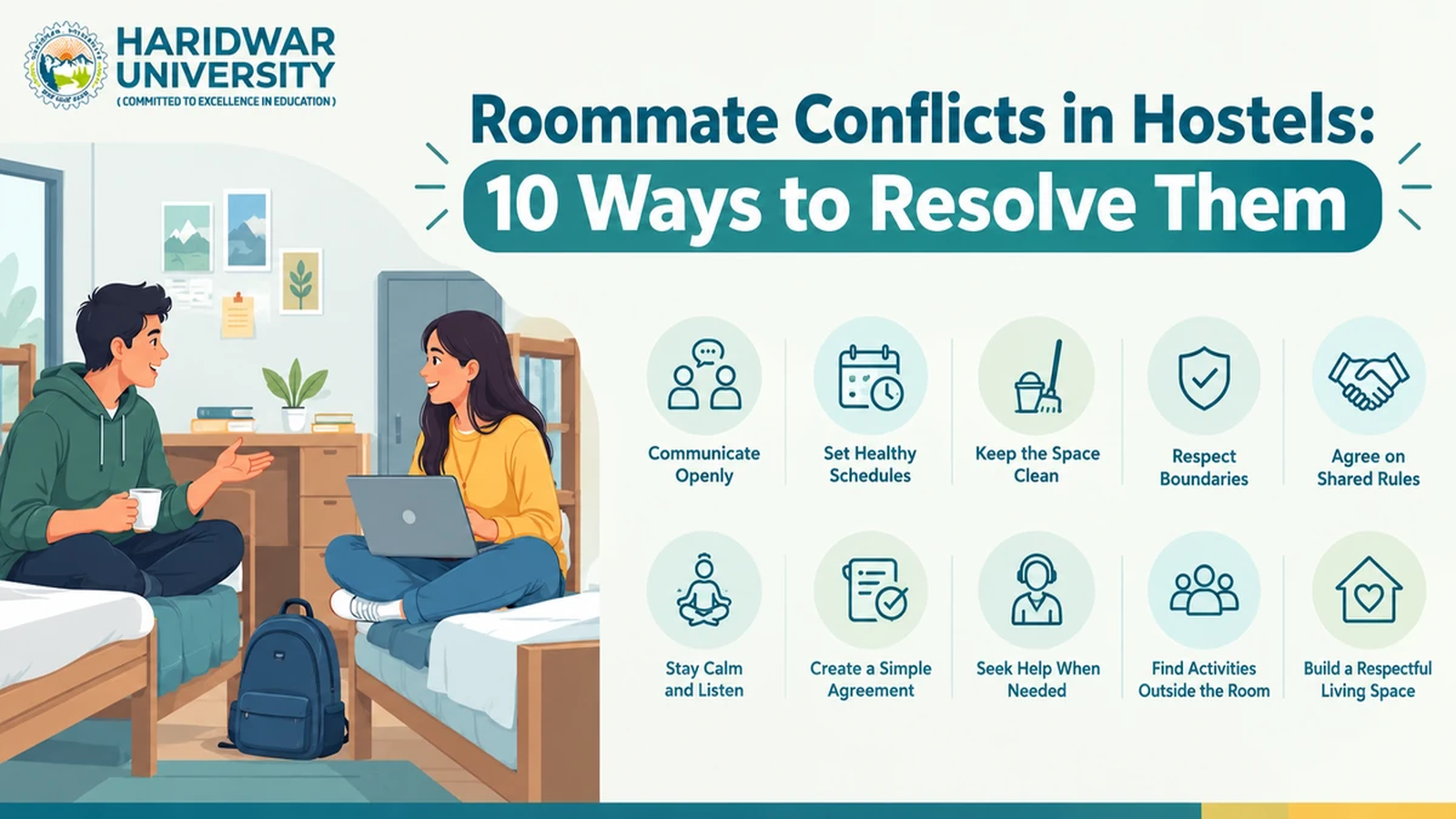
Living with a roommate can teach you patience, independence, and cooperation. It can also test all three. One person wants to sleep by 10 PM; the other studies with the lights on until midnight. Someone borrows a charger without asking, leaves food containers on the study desk, or invites friends over without checking first. What begins as a minor irritation can gradually snowball into a daily friction point.
Roommate conflicts in hostels are rarely about a single dramatic clash. More often, they stem from several small frustrations that are never discussed openly. In my view as a student welfare officer, the solution is neither to tolerate everything in silent resentment nor to turn every slight into an aggressive confrontation. The effective path is to address specific behaviours calmly, agree on workable boundaries, and know when to seek institutional guidance.
For students adjusting to shared campus accommodation, the following ten evidence-informed approaches offer a practical framework for harmonious living.
Table of Contents
1. Why Roommate Conflicts Start in Hostels
A university hostel unites students from diverse regional backgrounds, family customs, sleep schedules, study rhythms, and expectations of personal space. Even peers who hit it off socially can quickly discover that their daily operational habits are sharply mismatched.
Common college roommate frictions typically cluster around six distinct areas:
- Noise and sleep schedules: Early-morning phone alarms, late-night video streaming without headphones, or prolonged calls in the room while someone is trying to rest.
- Cleanliness standards: One resident expects an uncluttered desk and swept floor, while the other leaves gym clothes, food packets, or damp towels strewn across shared surfaces.
- Personal belongings: Food supplies, chargers, study stationery, or toiletries being used without clear permission.
- Visitors and personal privacy: Bringing coursemates or friends into the room unannounced when the other roommate needs solitude or examination focus.
- Study habits: One student requiring silence for dense problem-solving while the other prefers background music or group discussion.
- Shared room upkeep: Ambiguity over who disposes of the trash bin, sweeps common areas, or restocks shared essentials.
University residential life research highlights an important distinction: a personal difference is not the same as a boundary breach. Your roommate preferring to rise at 6 AM is merely a lifestyle difference. Your roommate consistently playing loud speaker audio at 6 AM after being asked not to is a boundary breach that demands direct, calm resolution.
2. 10 Practical Ways to Resolve Roommate Conflicts
Conflict resolution in shared accommodation is a practical life skill. The following 10 approaches help you defuse daily friction constructively without resorting to drama:
1. Address the Problem Before Resentment Builds
Small irritations are easiest to resolve before they crystallize into an unspoken catalog of grievances. If your roommate repeatedly leaves food packets on the desk, mention it when both of you are relaxed, rather than waiting until you snap during mid-term exams.
A productive opener sounds like: "Could we work out a quick system to keep the study table clear? I find it difficult to concentrate when books and food plates are mixed together." Focus strictly on the tangible behaviour and the desired change, avoiding generalizations like "You never keep anything clean."
2. Choose the Right Time and Place
Attempting to resolve a dispute over noise at 1:30 AM when both of you are exhausted and irritable almost always backfires. Choose a neutral, private time when neither person is rushing to morning lectures, preparing for a lab viva, or emotionally agitated.
Always speak face-to-face. While messaging apps work well for confirming logistical agreements, airing grievances through WhatsApp messages, passive-aggressive status updates, or wing group chats only deepens defensiveness.
3. Describe the Behaviour, Not the Personality
Attaching labels like "inconsiderate", "selfish", or "toxic" instantly triggers defensive walls. Instead, adopt behavioural framing: state the concrete action, clarify how it affected you, and suggest an actionable alternative.
- Instead of: "You have no respect for my sleep."
Try: "When your video call continued after midnight, I had trouble falling asleep before my 8 AM class. Can we agree on quiet hours after 11 PM?" - Instead of: "You are always taking my stuff."
Try: "My laptop charger was moved from my desk without asking. Please check with me first before borrowing personal electronics."
4. Listen to Your Roommate's Side
Conflict resolution is a dialogue, not a unilateral verdict. Your roommate might also harbour unexpressed frustrations about your habits that you are entirely unaware of.
Ask openly: "What could we adjust to make this room work better for both of us?" If they point out that your early-morning phone alarm buzzes repeatedly on snooze, switch to vibration mode or place your phone within arm's reach. Active listening demonstrates goodwill and builds reciprocal cooperation.
5. Agree on Quiet Hours and Study Routines
A hostel room is simultaneously a bedroom, study hall, dressing area, and social lounge. Because these roles clash, setting explicit quiet hours is essential.
Discuss routine bedtime windows, phone call protocols, and study schedules. If one student is a night owl and the other rises at dawn, agree that calls will be taken on the balcony or common lounges, and that desk lamps will be used instead of ceiling lights. Students can also channel energy and social time outdoors by utilizing the extensive sports and recreation facilities at Haridwar University so the room remains a restful sanctum.
6. Set Clear Rules for Cleaning and Shared Belongings
Never assume that your roommate defines "tidy" the same way you do. Establish clear shared expectations: who empties the room wastebasket, how often the floor is swept, where damp laundry is hung, and how personal desks are kept.
When it comes to personal items, establish a clear protocol: food supplies, grooming products, headphones, and chargers are private by default. A golden rule keeps life simple: ask before borrowing, return promptly in identical condition, and replace anything depleted or damaged. For practical packing strategies that minimize room clutter, consult our comprehensive hostel packing list guide.
7. Discuss Visitors, Privacy and Shared Space
Both occupants pay accommodation fees and hold an equal right to comfort and privacy. Having classmates over to collaborate on an engineering project might seem completely harmless to you, but it can be exhausting for a roommate who has just finished a taxing lab session and needs rest.
Agree on advance notice before inviting friends over, set limits on group size, and align with official university guest timings. A simple courtesy check prevents awkward moments: "Would you mind if a classmate stops by for forty minutes to review assignment questions, or would later suit you better?"
8. Write Down a Simple Roommate Agreement
Human memory is inherently subjective, and informal verbal chats can easily be forgotten or misinterpreted under academic stress. A concise, written living agreement converts vague intentions into a clear, mutual reference point.
Note down bullet points covering:
- Nighttime quiet hours (e.g., 10:30 PM to 6:30 AM).
- Weekly cleaning schedule and waste disposal rotation.
- Borrowing etiquette and boundaries for personal electronics and food.
- Visitor policies in full alignment with official hostel rules.
- A straightforward protocol for raising concerns before emotions peak.
Keep this agreement living and flexible—revisit it when class timetables change or examination periods begin.
9. Take a Break When the Conversation Gets Heated
Not every disagreement can be settled in a single discussion. If voices are raised, sarcastic barbs are traded, or either person feels overwhelmed, pause the conversation immediately.
Say calmly: "I want us to find a practical solution, but we are both getting frustrated right now. Let's take a break and talk this evening after dinner." Use that intermission to decompress—not to mobilize friends in the hostel wing into rival camps. Revisit the discussion once emotions have cooled.
10. Look for a Fair Compromise, Not a Perfect Roommate
You do not need to become inseparable best friends with your roommate to share a room successfully. One person may be an extrovert who thrives on social interaction, while the other is an introvert who prefers quiet reflection.
The goal is mutual respect, predictable routines, and a workable compromise. For instance, your roommate agrees to take phone calls outside the room after 10 PM, while you use headphones when listening to lecture recordings during daytime hours. A fair compromise honors both students' essential wellbeing without forcing either person to endure disrespect.
3. How to Handle a Roommate Who Refuses to Cooperate
What if you have communicated calmly, suggested fair compromises, and your roommate continues to ignore agreed boundaries or dismisses your concerns outright?
First, sharpen the specificity of your requests. Move from abstract phrases like "Please be more considerate" to concrete actions: "Please do not play audio through your phone speakers after 11 PM while I am sleeping."
Second, take ownership of what you can control. Lock your wardrobe and desk drawers, keep valuables and personal stationery secure, and decline further borrowing requests if items have been damaged or kept without permission. If room distractions persist during peak study hours, utilize dedicated university reading rooms or central library cubicles.
Third, maintain a factual, objective log of recurring incidents—recording dates, times, and specific occurrences. You do not have to manage an unyielding situation alone. When personal dialogue reaches an impasse, involving hostel administrative staff is the responsible and necessary next step.
4. When to Involve the Hostel Warden or Seek Help
Minor everyday adjustments do not require formal intervention. However, seeking professional assistance becomes imperative when repeated discussions fail, your academic performance or mental health suffers, or your safety is compromised.
At Haridwar University, our official hostel facilities are managed by experienced resident wardens and student welfare officers who mediate persistent disputes impartially under university guidelines.
Furthermore, students facing severe stress or interpersonal anxiety can access professional guidance through Haridwar University's dedicated Counselling and Assistance service. This department provides confidential psychological counselling, stress management support, and access to the Student Grievance Redressal Committee.
Zero Tolerance Warning: Verbal threats, physical intimidation, theft, coercion, sexual harassment, or bullying are serious disciplinary violations. If you ever feel unsafe, report immediately to your hostel warden, campus security, or emergency services. Never attempt to handle threatening behaviour alone.
If a room reallocation becomes necessary, follow the institution's official administrative protocol. Approaching authorities for mediation is not a personal failure—it is a mature use of the welfare resources established to safeguard your collegiate journey.
5. Frequently Asked Questions (FAQs)
1. What are the most common roommate problems in college hostels?
Typical problems include noise, different sleep schedules, cleanliness, borrowing belongings without permission, visitors, privacy and disagreements over shared responsibilities. Many can be reduced by discussing expectations early.
2. How do I deal with a bad roommate without starting an argument?
Focus on a specific behaviour rather than labelling the person. Choose a calm time, explain how the behaviour affects you, make a clear request and listen to their response. If the problem continues, seek help through the appropriate hostel channel.
3. What should I do if my roommate does not talk to me?
Give them reasonable space, then ask politely whether they would be willing to discuss practical matters affecting the room. Keep your request specific and respectful. If their silence prevents essential arrangements or the conflict continues, ask hostel staff for guidance.
4. How can roommates resolve disagreements over cleanliness?
Agree on a basic cleaning schedule and clarify who is responsible for each shared area. Set expectations that both people can reasonably follow, and discuss repeated problems directly rather than relying on hints or complaints to other students.
5. Should I share my food and belongings with my roommate?
Sharing should be agreed upon, not assumed. Discuss which items, if any, are communal. Ask permission before using personal belongings, return borrowed items and replace anything used up or damaged.
6. When should I ask the hostel warden to intervene?
Approach the warden when repeated discussions have not resolved the issue, when the conflict disrupts daily life or when you need help understanding hostel rules or available options. Report threats, harassment or aggression promptly rather than waiting for a private discussion to work.
7. Can I request a room change because of roommate conflicts?
You can ask the authorised hostel office about the room-change process, but approval depends on the institution's rules, available accommodation and the circumstances. Follow the official process rather than trying to force your roommate to leave.
6. Building a Respectful Shared Living Space
Hostel life rarely matches either roommate's initial romanticized expectations. The meticulous student who thrives on spotless organization will often share a room with someone more relaxed about clutter; an early riser will live alongside a night owl. These natural differences do not have to culminate in lasting resentment.
My primary advice to every fresher is simple: speak early, listen attentively, agree on clear boundaries, and keep discussions anchored to specific behaviours rather than personality flaws. When both individuals make an honest effort, the vast majority of room frictions dissolve into manageable daily routines.
For more insights on settling into campus accommodation, explore our companion guides on life at Haridwar University and our practical advice for navigating the initial weeks of hostel life.
A successful hostel stay does not require becoming identical or best friends. It requires mutual consideration, clear boundaries, and a shared realization that both roommates deserve a safe, supportive environment to rest and excel in their higher education.
Thrive in a Supportive, Well-Equipped Campus Community at Haridwar University
From modern residential hostels and 24/7 student welfare assistance to enriching campus societies and dedicated counselling, Haridwar University creates an empowering foundation for your university success.