

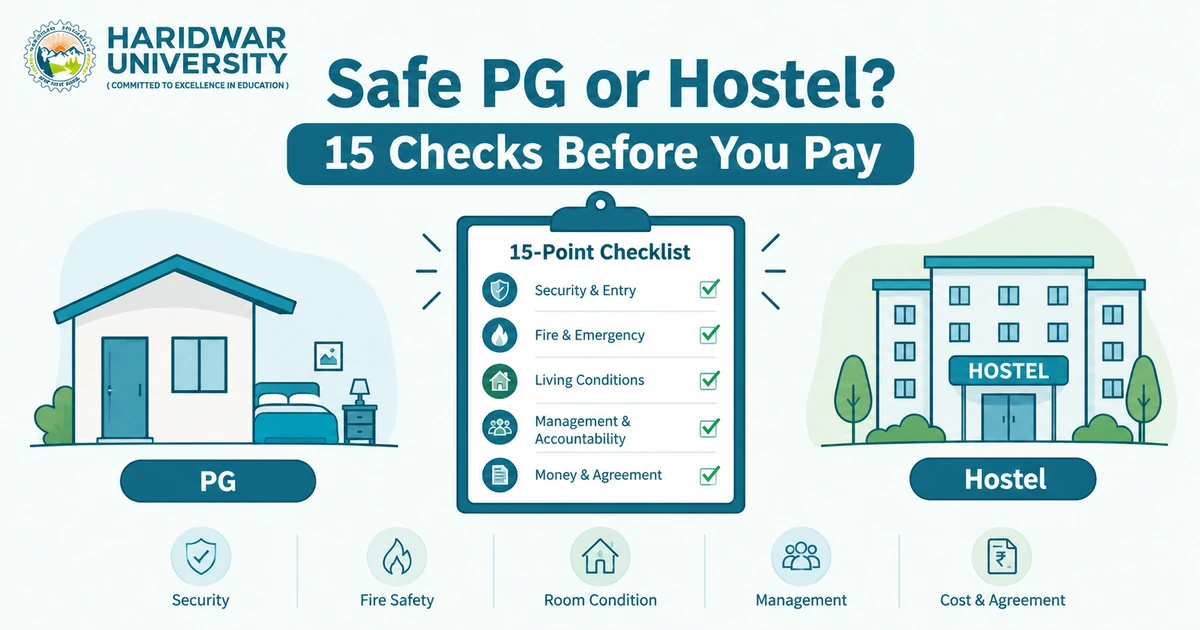
Choosing student accommodation is not simply a matter of finding a clean room at an affordable price. A paying guest (PG) house or college hostel becomes the home where a student sleeps, studies, stores personal electronics, and returns after demanding laboratories or evening campus activities. Before remitting a booking deposit or signing a lease agreement, students and parents must verify who manages the property, how physical access is controlled, what happens during medical emergencies, and which clauses could cause financial disputes later.
When evaluating student housing, it is critical to look beyond promotional photographs and verbal assurances. A freshly painted bedroom cannot compensate for a flimsy door lock, an obstructed fire exit, or hidden electricity tariffs. Neither should a property be judged unsafe simply because it is a private residence, nor safe solely because it carries a hostel banner. Safety depends entirely on verifiable physical arrangements.
This safe PG or hostel checklist outlines 15 practical, on-the-ground checks every student and parent should complete before transferring a single rupee.
Table of Contents
- 1. Checks 1–3: Entry and Personal Security
- 2. Checks 4–6: Fire and Emergency Readiness
- 3. Checks 7–9: Living Environment and Hygiene
- 4. Checks 10–12: Management Accountability and Escalation
- 5. Checks 13–15: Agreements, Hidden Costs and Payment Safety
- 6. A Practical Way to Evaluate the Property
- 7. Frequently Asked Questions (FAQs)
- 8. Make the Decision After Verification
1. Checks 1–3: Entry and Personal Security
Check 1: Inspect the Main Entrance and Visitor Protocols
Ask how residents access the building, how outside visitors are logged, and who challenges unauthorized entrants. If the property advertises gated security or biometric access, verify that turnstiles and scanners are actively functional. A security guard at the gate is only effective when duties and visitor registration procedures are rigorously maintained.
Check 2: Test Room Locks, Latches, and Master Key Policies
Physically lock and unlock the bedroom door yourself from both sides. Test window latches, balcony grilles, and individual wardrobe lockers. Confirm who holds master or duplicate keys and under what specific protocols cleaning staff or landlords may enter private rooms. Demand written confirmation that damaged hardware will be replaced before you move in.
Check 3: Verify Genuine CCTV Coverage Without Compromising Privacy
Examine camera placement along main building perimeters, entry gates, and common stairwells. Do not assume a camera is recording simply because an LED light is blinking. Inquire how footage is archived and who monitors the feed. Crucially, verify that surveillance cameras are strictly absent from bedrooms, washrooms, changing lobbies, or private living quarters.
2. Checks 4–6: Fire and Emergency Readiness
Check 4: Walk the Physical Evacuation Route
Walk directly from your prospective bedroom door to the nearest ground-level exit. Check that corridors, staircases, and fire doors are completely unobstructed by discarded furniture, packing cartons, or padlocked exit gates. Inquire how emergency evacuation alarms are triggered. Never accept a verbal assurance when you can walk the escape route yourself.
Check 5: Inspect Fire Extinguishers and Electrical Wiring
Check pressure gauges and inspection tags on fire extinguishers across residential floors. Watch out for overloaded electrical distribution boards, dangling wires, burned switchboards, or high-draw appliances plugged into lightweight extension cords. A single decorative extinguisher does not constitute fire preparedness.
Check 6: Confirm 24/7 Emergency Medical and Police Contacts
Save the property warden or manager’s direct phone number before moving in. Inquire about nighttime medical ambulance protocols and tie-ups with nearby healthcare centers. Remember that across India, 112 serves as the unified national emergency number for police, fire, and medical assistance under the Emergency Response Support System (ERSS).
3. Checks 7–9: Living Environment and Hygiene
Check 7: Evaluate the Access Route After Dark
Visit the accommodation in the afternoon, but return in the evening around 8:00 PM. Observe street lighting along approach roads, public transit connectivity, and neighborhood safety. A lane that seems lively at midday may feel isolated and dimly lit when returning late from campus library sessions.
Check 8: Inspect Room Density, Natural Light, and Ventilation
Confirm exact occupant density (single, double, or triple sharing) and verify that room dimensions match what was advertised. Inspect windows for cross-ventilation, test fans and air-conditioners, and check wall corners for dampness or black mould. Overcrowded rooms with poor airflow severely degrade academic focus and sleep quality.
Check 9: Verify Drinking Water Filtration and Bathroom Sanitation
Inspect RO water purification systems, water cooler maintenance logs, bathroom plumbing, geysers, and waste disposal bins. Clarify whether daily housekeeping is included in the base fee or billed as an extra surcharge.
The Institutional Benchmark: For comparison, on-campus accommodations detailed on the Haridwar University Hostel Portal feature residential wardens, biometric access control, commercial RO water filtration plants, regular sanitization, in-house laundry quotas, and an on-campus infirmary with ambulance support.
4. Checks 10–12: Management Accountability and Escalation
Check 10: Speak Privately with Current Student Residents
Speak directly with two or three senior students residing on the property away from management. Ask specific, measurable questions: “How many days did it take to fix the Wi-Fi or geyser during winter?” and “Is drinking water consistent during power outages?” If a landlord aggressively discourages speaking with current residents, treat that as an immediate red flag.
Check 11: Identify Legal Property Ownership and Authority
Verify that the person collecting rent is the legitimate property owner or a formally authorized sub-leasing manager. For university housing, verify assignments strictly through official registrar offices or the Academic Programmes Portal, avoiding unauthorized third-party booking brokers.
Check 12: Establish a Documented Grievance Escalation Route
Clarify who resolves roommate conflicts, maintenance failures, or harassment concerns. Check whether written grievance logs exist. Prospective students can consult our First-Year Student Guide and our overview of Life at Haridwar University to understand campus welfare networks.
5. Checks 13–15: Agreements, Hidden Costs and Payment Safety
Check 13: Read the Entire Written Agreement Before Signing
Ensure the formal rental contract clearly identifies tenancy duration, monthly rent, lock-in period, mandatory notice window (typically 30–60 days), guest policies, gate timings, and maintenance obligations. Never rely on verbal statements that contradict printed clauses.
Check 14: Compute Total Real Expenditure, Not Advertised Base Rent
Demand a complete fee schedule detailing base room charges, security deposit terms, electricity per-unit rates, dining plans, laundry overages, and daily transit fares. A low nominal room rent quickly escalates once food and transit costs are factored in.
Check 15: Verify Payment Beneficiary and Resist Artificial Pressure
Never transfer token advance payments to personal UPI accounts or unverified third parties under pressure that “only one room is left.” Insist on formal tax invoices or signed receipts stating exact booking terms and refund conditions. Review our Hostel Packing & Move-in Checklist to prepare systematically.
6. A Practical Way to Evaluate the Property
Use this three-tier triage rubric while inspecting accommodation options in person:
| Assessment Status | Action Protocol |
|---|---|
| Verified (Green) | Locks, exits, hygiene, and written terms are completely transparent. Proceed to finalize agreement. |
| Needs Clarification (Yellow) | Minor defects, missing receipt breakdown, or pending lock repairs. Withhold deposit until formal written confirmation is provided. |
| Serious Concern (Red Flag) | Padlocked emergency stairs, exposed wiring, refusal to provide a rental contract, or pressure to pay unverified accounts. Discontinue evaluation immediately. |
7. Frequently Asked Questions (FAQs)
Is a PG safer than a college hostel?
Neither accommodation is automatically safer by default. Security depends entirely on physical entry controls, emergency exits, warden oversight, and verified management accountability. Always inspect the specific premises.
What should students check first when visiting a PG?
Inspect entry gates, bedroom locks, and fire evacuation routes first. Then examine electrical wiring, drinking water hygiene, bathroom sanitation, and printed rental agreement terms.
Should I pay a booking amount before visiting the property?
Never pay non-refundable booking tokens without an in-person viewing or a verified live video walkthrough, accompanied by written confirmation of refund conditions.
Which documents should I ask for before renting a PG?
Demand a formal rental agreement outlining rent, deposit refund conditions, notice period, and rules. Obtain written receipts matching the legal property owner's identity.
How can I check whether CCTV and security arrangements are genuine?
Ask to view the live monitoring screen in the management office, verify coverage across building gates and hallways, and confirm that private living quarters remain completely unmonitored.
What are the biggest warning signs when choosing student accommodation?
Major red flags include blocked emergency exits, broken bedroom locks, exposed wiring, refusal to sign a written agreement, pressure to pay cash immediately, and hostility when asking to speak with current residents.
What should parents verify before a student moves into a hostel?
Parents should verify room allocation, residential warden contacts, gate curfews, medical emergency tie-ups, mess hygiene, and all-inclusive fee breakdowns through official university channels.
8. Make the Decision After Verification
The right student accommodation is not necessarily the flashiest property or the one with the lowest upfront rent. It is the residence where students can live comfortably, safeguard their personal belongings, study without disruption, and receive immediate support during unforeseen emergencies.
Inspect thoroughly, ask precise questions, secure essential promises in writing, and pay only after complete verification. A small amount of diligence before moving in prevents significant safety hazards and financial disputes throughout the academic year.
Secure, Transparent Student Living at Haridwar University
Experience 24/7 security, hygienic dining, modern amenities, and a vibrant peer community. Connect with our admissions counselors and schedule your campus visit today.