

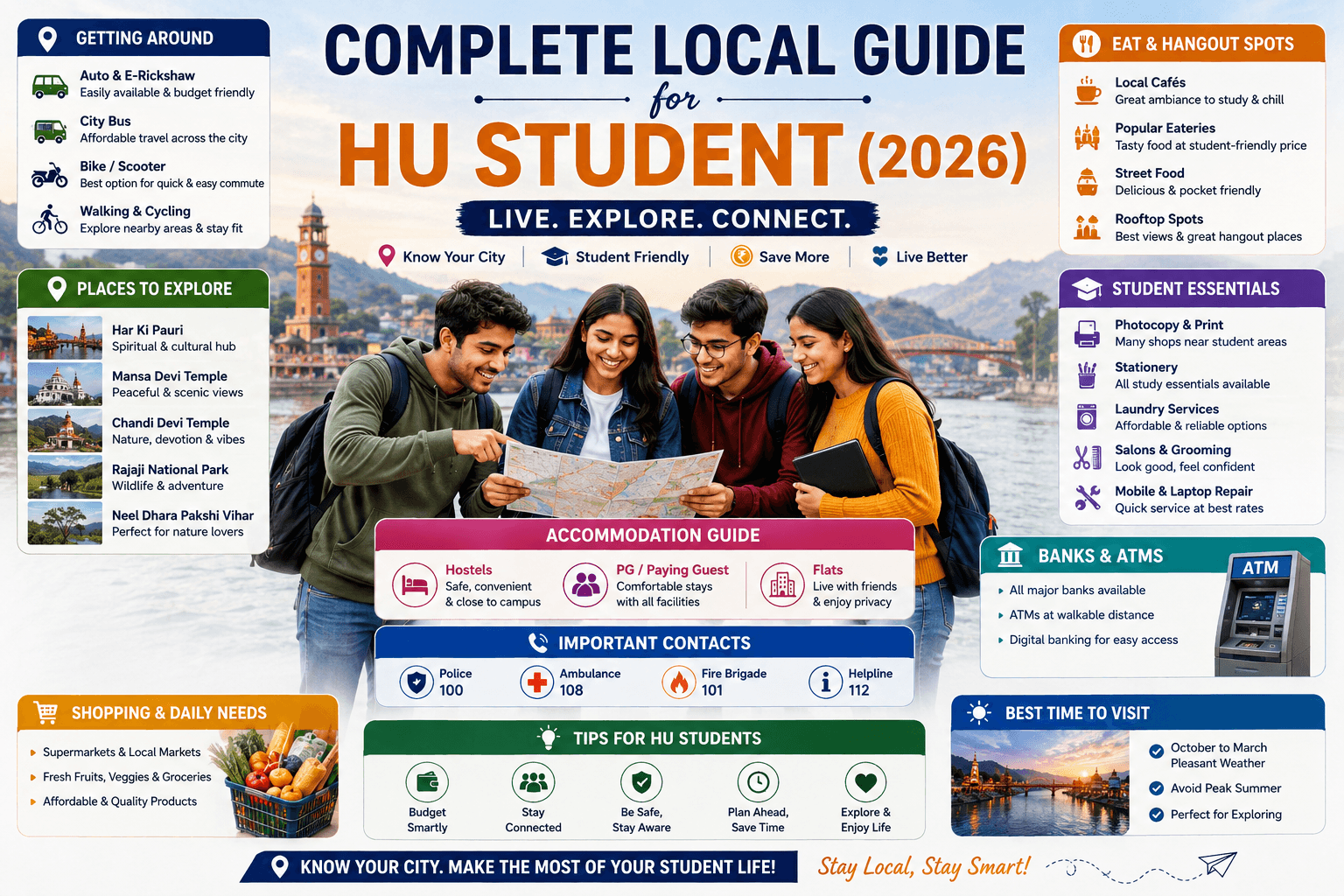
Complete Local Guide for HU Student (2026)
Lt. Sumit Chauhan
Registrar, Haridwar University
Table of Contents
Student Life in Haridwar University mostly comes down to a few practical things: what you'll spend each month, where you'll eat, how safe the town actually is, and what you'll do on a Sunday when there's no class. I get asked these same questions every single year, so instead of repeating myself in fifty phone calls, I've put together everything in one place — what it actually costs to live here, which areas are worth considering, who to call in an emergency, and where to go when you just want to get off campus for a few hours. This guide answers all of that, straight, without the usual admission-brochure fluff.
1. About Roorkee City
Safe & Quiet Atmosphere
Roorkee doesn't carry the edge a bigger city does. It's an old cantonment town, laid out in an orderly, low-density way that's very different from the chaos most students picture before they arrive. The pace is slower than what most first-years are used to, and honestly, that's a feature, not a drawback: fewer distractions, shorter commutes, and a town small enough that you'll recognise half the market within a month. Parents ask about this more than anything else, and my honest answer is that the town's size is its own kind of safety net — word travels fast here, and nothing stays anonymous for long.
Historic IIT-Town
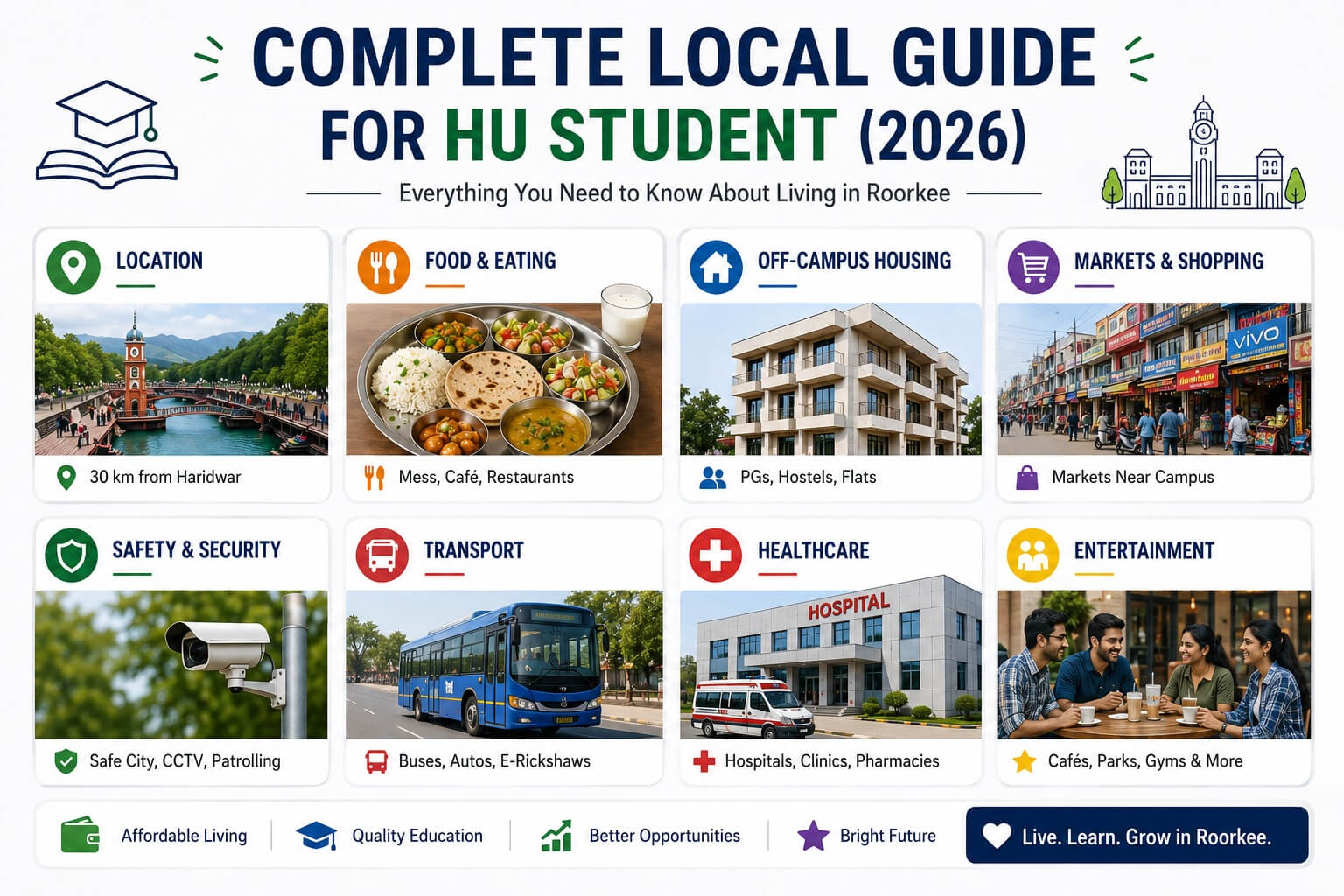
Roorkee falls in the Haridwar district of Uttarakhand, on the Ganga Canal, about 170 km from Delhi and roughly 29–30 km from Haridwar city (Roorkee geography on Wikipedia). It's built around a serious engineering heritage — IIT Roorkee has been here for over a century, and that academic identity shapes the whole town, from the bookshops to the coaching centres to the general expectation that most young people around you are here to study, not to loiter.
Student-Friendly Living & Reliable Campus Infrastructure
Because outstation students have been passing through for decades, shopkeepers, landlords and auto drivers deal with them constantly. Nobody looks twice at a hostel ID card here. Weather-wise, expect the usual North Indian pattern — warm summers running into a proper monsoon around July–August, and a cold, foggy winter from December through February that catches a lot of students from the plains off guard, so pack a decent jacket; nobody mentions that in the prospectus.
On campus, that same predictability holds: Haridwar University runs 100 Mbps Wi-Fi across hostels, classrooms and the library, and a reliable backup power setup with its own diesel generators and UPS for labs (24x7 Power Supply), so a local outage doesn't mean a dead laptop mid-assignment.
2. Monthly Cost of Living (₹8,000 – ₹15,000)
This is the number every parent actually wants, and it's also the one nobody explains properly. If you're in the HU hostel, mess and Wi-Fi are already covered as part of your hostel fee, so your out-of-pocket spend — mobile recharge, laundry, autos, the odd outing — usually stays under ₹8,000–₹10,000 a month. Move to a PG off campus and rent alone adds another ₹4,000–7,000, pushing the total closer to ₹15,000.
Roughly, here's where that money tends to go each month:
- Food / Mess (if not on the hostel plan): ₹3,000 – ₹4,500
- Local transport (autos, buses): ₹800 – ₹1,500
- Mobile / Data recharge: ₹300 – ₹500
- Laundry, stationery, personal spends: ₹1,500 – ₹3,000
- Off-campus PG rent (if applicable): ₹4,000 – ₹7,000
Nothing exotic here — it's what most students report once they've settled in for a semester or two. A few things do swing this number: first-semester students tend to spend more simply because everything is new and they haven't figured out where the cheaper options are yet, and students who go home every second weekend obviously spend more on travel than those who stay put. My general advice to freshers is to keep roughly ₹2,000 aside in the first month purely for one-time setup costs — bucket, iron, extra blankets, a study lamp — and not count that against your regular monthly budget. Check full details on fee structures on the Admission Fees & Scholarships page.
3. Food, Mess & Getting Around
Food at Haridwar University and Nearby
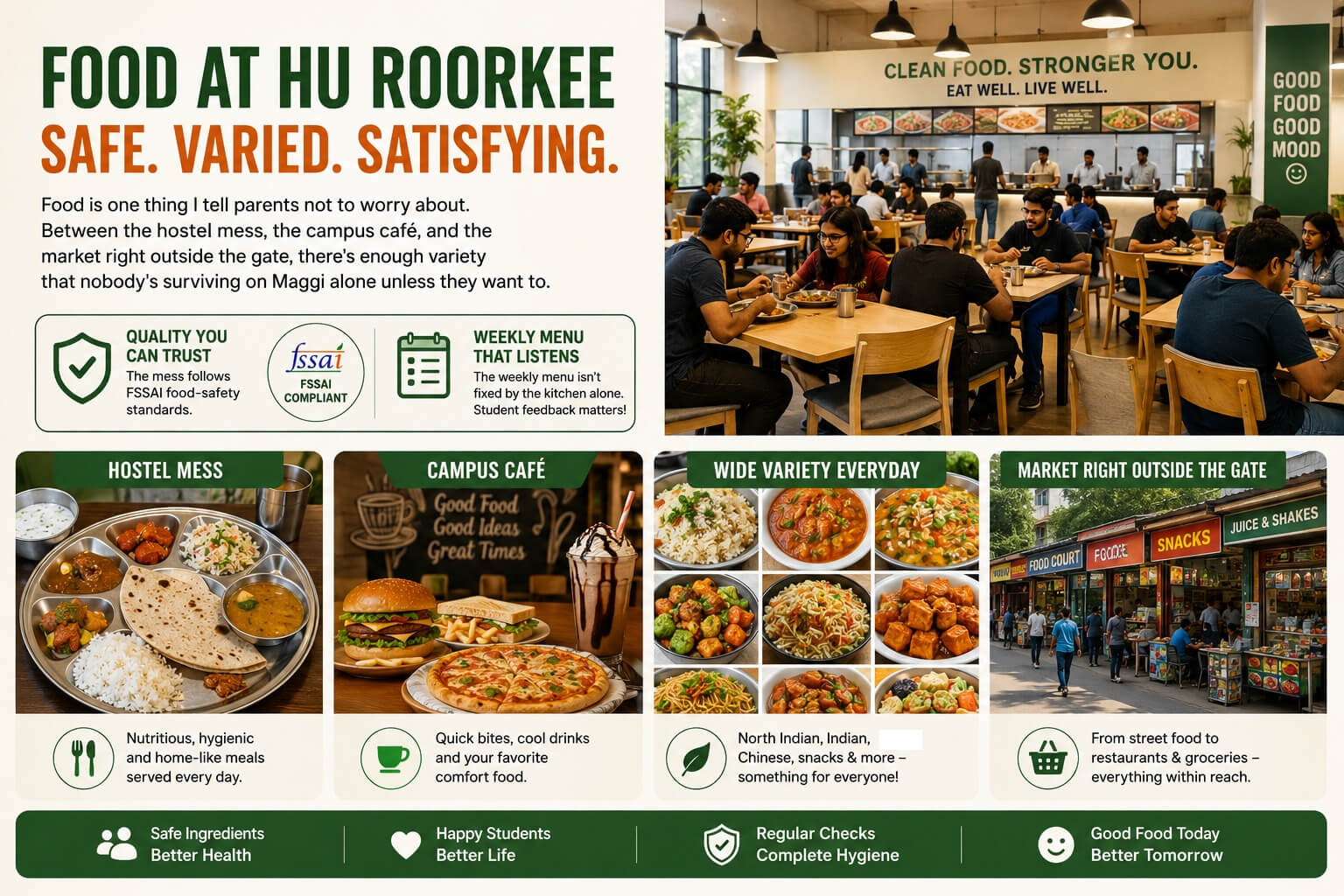
Food is one thing I tell parents not to worry about. Between the hostel mess, the campus café, and the market right outside the gate, there's enough variety that nobody's surviving on Maggi alone unless they want to. Quality is monitored too — the mess follows FSSAI food-safety standards, and the weekly menu isn't fixed by the kitchen alone.
Hostel Mess & Campus Dining
The hostel mess serves vegetarian food three times a day, decided by a student mess committee so the menu actually reflects what students want rather than what's convenient for the kitchen. The campus café stays open round the clock for tea, coffee and late-night snacking — useful more often than you'd expect once assignment deadlines start piling up — and the Red Hut on campus handles non-veg for a small extra cost (HU Canteen & Cafeteria options).
Local Eateries
Step outside the gate and Ganeshpur has enough dhabas and chaat stalls to never repeat a meal in a month; Civil Lines, a bit further in, has slightly more variety if you're willing to make the trip. Most students settle into a rotation of two or three regular spots within the first month — one for a quick snack, one for a proper meal, one for when the mess menu just isn't appealing that day.
Getting Around Roorkee & Regional Transport
Getting around Roorkee, and getting out of it, rarely takes more planning than most students expect. Between shared autos for the daily runs and a well-connected railway station for the longer trips, most students find they don't need their own vehicle at all in the first year.
- Auto: Shared autos and Vikrams cover most local trips for ₹20–40 a ride. Most students figure out a regular auto guy within the first few weeks — it genuinely makes life easier once someone knows your hostel gate and your usual timing.
- Bus: City buses run along the NH-58 corridor (Ministry of Road Transport NH-58 info) and are the cheaper option for anyone not in a hurry. They're also how most students get to the Roorkee bus depot for longer intercity trips when a train isn't convenient.
- Connectivity to Delhi, Dehradun & Haridwar: Roorkee's railway station sits on the main Delhi–Dehradun line (Indian Railways schedule). Haridwar is about 29–30 km away (30–45 minutes by road), Dehradun is 65–93 km away (around 2 hours via bus or train), and Delhi is roughly 170 km away (3.5–4 hours by train). That connectivity makes weekend trips home realistic during long weekends rather than a whole ordeal.
4. Safety, Especially for Girls
Roorkee doesn't have the edge a bigger city does, and the hostel setup reflects that. Prem Lata Bhawan, the girls' hostel, has a dedicated lady warden on site, round-the-clock security guards, CCTV coverage, and biometric entry — all listed on the official HU Hostel page. It's meant for girl students only, which a lot of parents ask about specifically before admission, so worth mentioning here plainly.
Off campus, Uttarakhand's Women Helpline (1090, toll-free) and the general police helpline (112) both work statewide, and the Haridwar District Police office lists a separate control room line for Roorkee, in case something needs a local response rather than a state-level one.
The basics still apply anywhere, and I'd rather repeat them than assume they're obvious: stick to main roads after dark, keep the warden's number saved before you need it, and take a registered auto or cab rather than whatever's parked outside at midnight. Most students, girls and boys both, end up moving around in twos or threes for late-evening market runs simply out of habit — not because anything's happened, just because it's the sensible norm here.
5. Weekend Spots & Campus Life
Haridwar's Har Ki Pauri, with its evening Ganga Aarti, is about 30 minutes away — a fairly regular Saturday-evening trip once you've settled in, and honestly worth doing at least once even if you're not particularly religious. Rishikesh, roughly an hour further, has the cafés and ghats most students end up posting on their Instagram (check Uttarakhand Tourism for seasonal notes, especially around monsoon when river activities get suspended).
Closer to campus, the canal-side stretch near IIT Roorkee is the low-effort option for an evening walk, and the Piran Kaliyar dargah, a short drive out, is a quieter half-day trip that a lot of students only discover in their second or third year — worth doing earlier if you get the chance.
If you'd rather stay in, HU's own sports facilities (Sports & Facilities page) cover everything from cricket and football to badminton and table tennis, plus the annual Sports Carnival that pulls in students from other institutions too. The gym (Gymnasium page) runs separate morning and evening slots for boys and girls, so there's no real excuse to skip a workout even during exam weeks. Students can also get involved in leadership activities via NCC or cultural festivals at the university Auditorium.
6. Healthcare Near Campus
HU keeps an ambulance and pharmacy on campus around the clock, which handles most first-response situations — a fever, a sprained ankle, the usual first-semester stuff. For anything bigger, the Government Civil Hospital on Dehradun Road and the Roorkee Cantonment Board Hospital are the nearest government facilities and treat patients at genuinely low cost, and the town also has a handful of private multispecialty hospitals for anything that needs quicker or more specialised attention.
Worth saving now, not when you need it:
- Ambulance Helpline: 108
- Police Control Room: 112
- Uttarakhand Women Helpline: 1090
I'd also suggest keeping a basic first-aid kit and your prescription details (if any) in your hostel room — sounds obvious, but it's the thing most students forget until the one time they actually need it.
7. Local Shopping
Civil Lines and the Main/Sapper Bazar cover clothes and electronics; Vishal Mega Mart and Shiv Complex are the go-to for a bigger shopping run, especially at the start of a semester when you're stocking up on hostel essentials.
For everyday stuff — stationery, snacks, a quick printout before class — the Ganeshpur market right outside campus is usually faster and cheaper than going into town (Roorkee Municipal Corporation info), and it's where most students end up doing 80% of their shopping simply out of convenience. Prices here are noticeably lower than what you'd pay in a metro city, which is one of the quieter financial advantages of studying in a smaller town.
8. Best Areas to Live Off-Campus
Most first-years are better off in the hostel — it's the simpler, safer version of student life in Haridwar University, and everything from Wi-Fi to security is already sorted (details on the hostel page). Students who do move out in later years usually end up in one of three areas:
- Bajuheri / Ganeshpur: Closest to the gate, cheapest, popular with students who want to walk to class.
- Civil Lines: A bit pricier, closer to IIT, more food options and a slightly more upscale feel.
- Railway Road / Chow Mandi: Central, well connected, good for anyone who travels home often since it's near the transport hubs.
Whatever you pick, check the water supply and power backup before you sign anything — landlords will tell you it's fine, but ask other tenants directly if you can. It's also worth visiting in person rather than deciding off photos alone; a five-minute walk around the neighbourhood in the evening tells you more than any listing will.
9. Frequently Asked Questions (FAQs)
1. Is Roorkee safe for outstation students, especially girls?
Generally yes. It's a small, established student town, the girls' hostel (Prem Lata Bhawan) has round-the-clock security and a lady warden, and the state runs a dedicated women's helpline (1090).
2. What is the average monthly cost of living for an HU student?
₹8,000–10,000 in the hostel, closer to ₹15,000 if you're renting a PG off campus.
3. How far is Roorkee from Delhi, Dehradun, and Haridwar?
About 170 km from Delhi (3.5–4 hours by train), 65–93 km from Dehradun (around 2 hours), and 29–30 km from Haridwar (30–45 minutes by road).
4. Does HU provide on-campus hostel accommodation?
Yes — Munna Lal Bhawan and Krishan Dev Bhawan for boys, Prem Lata Bhawan for girls, all with security, Wi-Fi and mess included. See the hostel page for details.
5. What food options are available in and around campus?
The hostel mess covers daily meals, the 24/7 café and Red Hut handle snacks and non-veg, and Ganeshpur market has plenty of local dhabas within walking distance.
6. Where can students go for healthcare emergencies?
HU has an on-campus ambulance and pharmacy at all hours. For bigger issues, the Government Civil Hospital and Roorkee Cantonment Board Hospital are the nearest government options.
7. What are the best weekend getaways from Roorkee?
Haridwar for the Ganga Aarti and Rishikesh for its cafés and ghats — both under an hour or so from campus.
8. Is it better to live on-campus or off-campus?
On-campus is the easier, safer start for first-years. Off-campus makes more sense later, once you actually know the city.
9. How can I book a campus visit or apply for admission?
Reach out through the university's Contact Us page for a visit, or apply directly on the official Admission Portal for the 2026 intake.
Experience Campus Life First-Hand
None of this replaces actually walking the campus. Every parent I've spoken to who visited before deciding says the same thing — it settles the nerves faster than any brochure or blog post can, including this one. If you're finalising a BCA, B.Tech or MBA admission for 2026, the fastest way to know if HU is right for you is to visit, sit in on a mess meal, walk through a hostel room, and talk to a few current students about what an ordinary Tuesday actually looks like here.